




Getting under the skin of BMR hybrids – or what makes BMR BMR?
Silage sorghum is the fifth most important forage crop grown by humankind. It uses water far more efficiently, produces a large amount of biomass and delivers acceptable yields even during prolonged drought.
Lignin is one of the components of the plant cell wall. After cellulose, it is the second most abundant natural polymer, and while it offers plants many advantages, the complex bonds in lignin have a negative effect on the digestibility of plant cell walls in the digestive tract of ruminants.
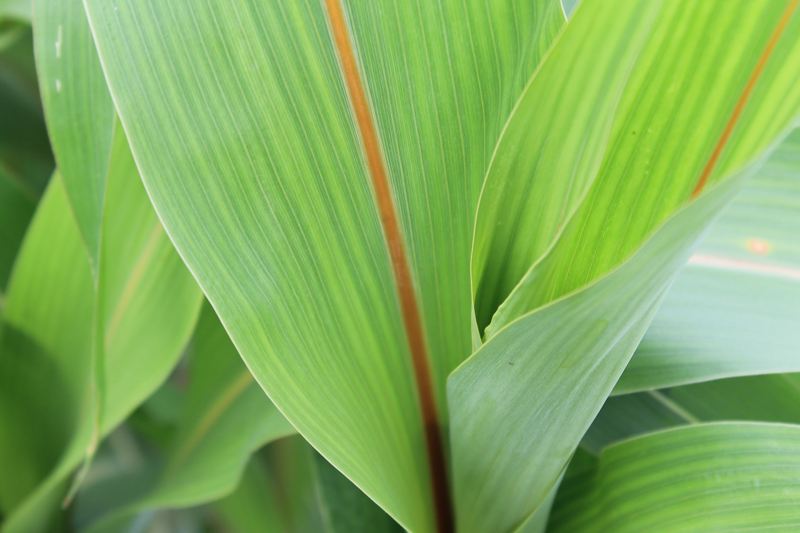
BMR is an acronym formed from the words Brown MidRib, referring to the brown central vein (midrib) of the leaf. This trait is the result of a mutation credited to Porter and colleagues. These researchers soaked sorghum seeds in diethyl sulfate and, after growing out the plants, noticed 19 sorghum plants with brown leaf midribs in the population, 3 of which also proved to be agronomically acceptable.

But what actually happened in these plants after the chemical mutagen treatment?
Essentially, biochemical processes changed in these plants. Two separate enzymes show reduced activity. One of them is CAD (cinnamyl alcohol dehydrogenase): the bmr-6 mutation lowers its activity, thereby reducing the amount of lignin produced by the plant. The other enzyme is caffeic acid O-methyltransferase, whose reduced activity results from a premature stop codon in the bmr-12 and bmr-18 genes (A. L. Oliver, et. al.).
Several earlier studies have shown that these differences in lignin synthesis affect animal performance. Holstein dairy cows fed forage made from BMR sorghum harvested at the right time were observed to produce more milk than cows fed “wild-type” or non-BMR forage sorghum.
All in all, we can say that BMR hybrids can offer a huge advantage for feed use thanks to their reduced lignin content. It is an undeniable fact, however, that having less of this natural plant binder also has drawbacks, which show up mainly in stalk strength.
A. L. Oliver, et. al.: Comparative Effects of the Sorghum BMR-6 and BMR-12 Genes: I. Forage Sorghum Yield and Quality